Research to support safe, sustainable offshore energy
Professor Mark Cassidy leads global review of ocean safety
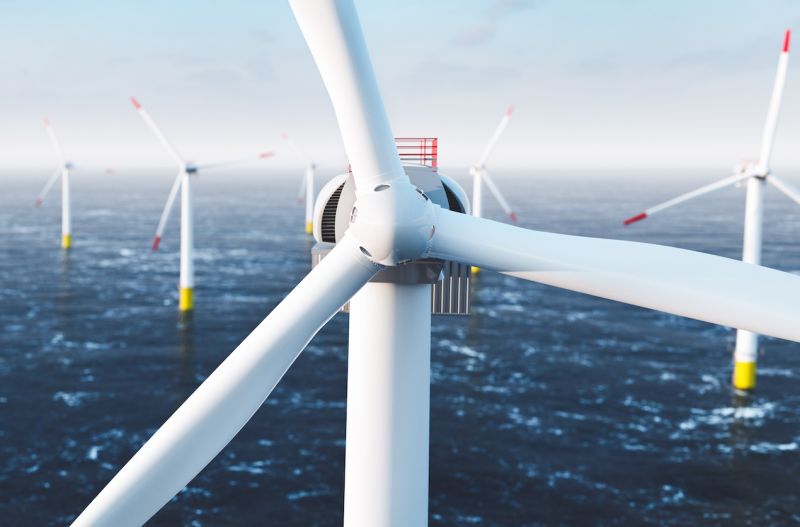
By 2050, a significant proportion of the world’s energy is predicted to be produced from renewable sources offshore, with hundreds of thousands of wind, wave and tidal energy devices coming into operation. The challenge is to ensure this can be done safely and sustainably, meeting energy demand while protecting people and planet.
Professor Mark Cassidy, Dean of the Melbourne School of Engineering at the University of Melbourne, outlines the challenges and opportunities in a recent Foresight review of ocean safety, part of a series of reports produced by independent global charity, Lloyd’s Register Foundation.
Oceans cover 70% of the Earth’s surface, yet remain “poorly governed, over-exploited and largely unmapped”, the report states.
As existing ocean industries continue to innovate and newer ones emerge – including renewable energy production from offshore wind, wave, tidal, solar and biomass – investment in the ‘blue economy’ is expected to grow at twice the rate of the mainstream global economy by 2030.
High returns are expected – investment of up to $3.7 trillion in key areas, including offshore wind production, from 2020 to 2050 would generate up to $22.8 trillion in net benefits, with a return on investment of up to 615 percent, the report predicts.
Research is needed to ensure that through this transition, funds and efforts are redirected from damaging activities into innovative solutions for a safe, sustainable and just future for oceans and people.
“To enable a sustainable future, we must build and invest in holistic infrastructure that ensures the ocean economy and its peoples can maintain resilience, while also ensuring that this is not done at the further expense of our planet’s increasingly fragile ecosystems,” Professor Cassidy writes.
Professor Cassidy was commissioned to lead the foresight review, and held workshops across Asia, Europe and North America involving experts from industry, academia and government before compiling their input and recommendations in the final report.
Offshore renewables are highlighted in the report as a way to achieve emissions-reduction targets for action on climate change while meeting energy demand, which has doubled in the last four decades and continues to grow. In Europe, China and North-West America, offshore wind farms are already generating energy at a levelised cost close to that of traditional generators, the report states.
Australia is yet to have an offshore wind industry, but there are now substantial efforts underway across industry and government. The Net Zero Australia project, of which the Melbourne Energy Institute is a partner, is the first such Australian study to show that offshore wind has an important role to play in our meeting our net-zero targets.
Stronger materials, new design methodologies and new approaches to engineering are needed to support ocean construction at this scale – in Europe and China, offshore wind farms are composed of thousands of structures, compared to the usual single-structure oil and gas platforms. Life-cycle planning for maintenance and decommissioning can ensure more sustainable use of resources.
Synergetic solutions can play a part in more holistic engineering design, for example by combining wave and wind energy generation in floating turbines, or building attached aquaculture farms, for example for seaweed.
The safety and welfare of workers – including equity, diversity and inclusion – are also important considerations for the growth of offshore energy. Financial and regulatory frameworks are needed to ensure a just transition, and public awareness is key.
All of these challenges require research and evidence to support strategic decisions in government, business and finance for a safe and sustainable future.