Race to mimic the stars: The global fusion energy industry gathers pace
Could the physicist's dream be coming true? Pundits predict we could soon be producing carbon-free, waste-free electricity, just like the stars do, using only abundant elements such as hydrogen – with fusion technologies potentially rising to a commercial industry, in the 2030s.
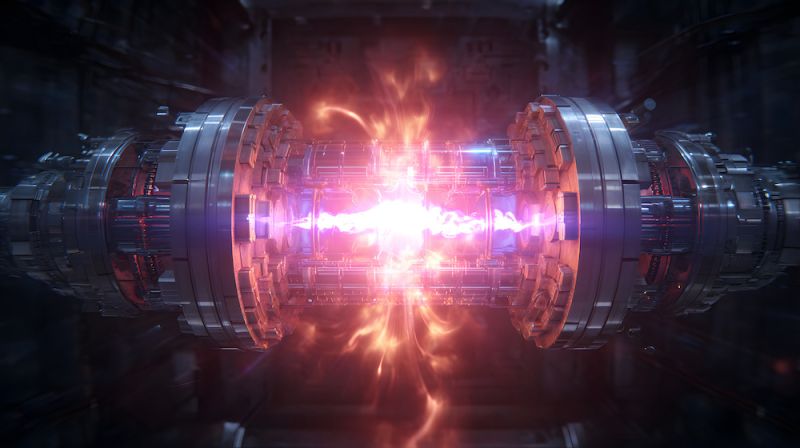
For decades, nuclear fusion has been tantalisingly attractive – promising abundant, carbon-free, affordable power from the same process that fuels the sun. In recent years, however, fusion has begun to shift from scientific ambition to industrial reality.
The 2025 Global Fusion Industry Report provides the clearest snapshot yet of that transition. Drawing on responses from more than 50 private fusion companies, it reveals an industry expanding rapidly in investment, workforce, and commercial ambition.
While major technical hurdles remain, the data suggest the 2030s could be the decade when we discover if fusion power can move from the laboratory to the electricity grid.
Professor Richard Sandberg, Director at the Melbourne Energy Institute, says the global expansion of the fusion sector would present many opportunities for Australia to participate in both research and industry development.
If fusion moves from a purely scientific pursuit to an industrial one, Australia’s energy transition and economy both stand to reap tremendous benefits.
– Professor Richard Sandberg, Director, Melbourne Energy Institute
“Australia has strengths in plasma physics, advanced materials, computational modeling and optimisation, and high-power lasers that could contribute to the international effort. As the industry grows, there will be opportunities not just in reactors, but across supply chains and specialised technologies,” said Prof Sandberg.
“Additionally, the carbon-free, base-load power supplied by fusion energy has the capacity to neatly supplement intermittent supplies generated by Australia’s rapidly growing renewable generation," he said.
Five times the investment in five years
The scale and speed of growth since 2020 paints a hopeful picture for fusion electricity.
According to the 2025 Global Fusion Industry Report, total private and public investment in fusion companies has reached US$9.7 billion, with US$2.6 billion raised in the past year alone. Just five years ago, the entire sector had attracted less than US$2 billion.
At the same time, the number of companies pursuing commercial fusion has more than doubled. The 2025 survey included 53 companies, up from just 23 in 2021, with new firms continuing to enter the market as investors and governments seek to capture the potential of a transformative energy technology.
The workforce is expanding just as quickly. Private fusion companies now employ more than 4,600 people directly, with the broader supply chain supporting around 9,300 additional jobs. Projections suggest that the workforce could reach more than 18,000 employees as pilot plants begin to be built later this decade.
Professor Martin Sevior, from the University of Melbourne’s School of Physics, said industry expansion would be a powerful indicator of innovation steadily reaching for commercialisation.
The data paints a picture of a technology poised to shift from scientific endeavour to fully-fledged industry.
– Professor Martin Sevior, School of Physics, the University of Melbourne
“But questions still remain. I’ve seen many ambitious new scientific instruments that propose significant advances in the state of the art. In practice, though, there always appears to be something not thought of. Unknown unknowns appear that mean genuinely new projects take longer and cost more than predicted,” Prof Sevior said.
“There are also difficult material science problems due to the intense neutron radiation from fusion. This may make fusion uneconomic compared to nuclear fission in many countries,” he said.
Both technical tensions and commercial hurdles will be hotly debated at the MEI Future Energy Forum, set to explore the rise of fusion energy globally, and the potential role, and benefits, for Australia.
Base-load, carbon-free electricity – without toxic waste
Fusion energy works by combining light atomic nuclei – typically forms of hydrogen – at extremely high temperatures, releasing large amounts of energy. It can be fueled with abundant resources, such as seawater and lithium.
Unlike conventional nuclear power, fusion does not rely on long-lived radioactive fuel. It produces no greenhouse emissions during operation, and no nuclear waste. It’s also expected to be lower cost than conventional nuclear power.
In a world desperate for low-carbon, affordable electricity – with demand climbing because of energy-intensive AI data centres and shifts to electrify homes, industries and transport – the promise provided by fusion electricity could have seismic impacts on our global – and national – capacity to decarbonise at pace.
But achieving fusion on Earth is extraordinarily difficult.
Scientists must confine plasma at temperatures exceeding those at the centre of the sun – of more than 15 million degrees – while engineering materials that can withstand intense neutron bombardment.
Key challenges still facing developers include achieving sufficient fusion power gain, ensuring tritium fuel supply, and designing materials capable of withstanding extreme conditions inside reactors.
Many companies are experimenting with different fuel cycles, reactor architectures and energy capture systems – mirroring the competitive experimentation seen in other emerging technologies.
Right now, it's a race between three broad approaches:
- Magnetic confinement systems, including tokamaks and stellarators, which use powerful magnetic fields to contain plasma.
- Inertial confinement systems, which use lasers or other drivers to compress fuel pellets to fusion conditions.
- Magneto-inertial and hybrid systems, which combine elements of both approaches.
Recent progress by fusion companies has been spurred by a couple of significant technological breakthroughs in magnets and modelling, delivering a step change in our capacity to predict and contain the almost incomprehensible heat fusion emits.
“The development of high-temperature superconducting magnets has given rise to new ways of containing scorching million-degree-celius plasmas,” said Prof Sandberg.
“At the same time, modelling and simulation capabilities have been significantly boosted by the combination of AI and GPU-accelerated hardware,” he said.
Will the 2030s be the decade for fusion?
A common criticism of fusion scientists is that, for more than 30 years, they have been promising breakthroughs “in 30 years’ time”. But that window seems to be finally getting smaller.
Most industry respondents to the 2025 survey expect to operate a commercially viable pilot plant between 2030 and 2035, with a similar number anticipating delivering electricity to the grid during the same period.
This shift toward commercial timelines is being reinforced by early commercial partnerships.
In recent years, fusion developers have signed their first power purchase agreements with major energy customers and begun selecting sites for pilot power plants.
These early agreements represent a possible turning point. Fusion companies are starting to move beyond proving the physics; they are beginning to plan how their reactors will operate within real energy systems.
– Professor Martin Sevior, School of Physics, the University of Melbourne
Momentum in every corner of the globe, including Australia
Fusion development is becoming geographically diverse, with companies now headquartered across North America, Europe, Asia and Oceania, including Australia.
Governments are increasingly participating through public-private partnerships, moving from research funding to later innovation cycle projects de-risking the final steps to pilot, demonstration and commercialisation. Over the past year, public funding identified by companies increased by 84 percent, approaching a total of US$800 million.
These partnerships are designed to accelerate the development of pilot plants and help countries establish themselves as future fusion hubs – regions that could host reactors, manufacturing facilities and specialised supply chains.
Clusters are already forming in regions such as Oxford in the United Kingdom, parts of the United States, and emerging technology centres in Europe and Asia, with several companies recently reporting major milestones.
One example is Helion Energy, a Washington-based fusion energy company, which recently became the first privately developed fusion energy machine to demonstrate deuterium-tritium fusion and achieve plasma temperatures of 150 million degrees Celsius. Both milestones mark significant breakthroughs in realising commercially viable fusion energy, and are firsts for the private fusion industry.
The company also previously signed a landmark agreement to provide electricity from its first fusion power plant to a major technology company.
Also in the United States, Type One Energy has taken the important step of submitting its first licence application for a fusion power plant in Tennessee, in partnership with the Tennessee Valley Authority.
In Europe, Proxima Fusion has partnered with energy company RWE, the Free State of Bavaria and the Max Planck Institute for Plasma Physics to explore building what could become the world’s first commercial stellarator power plant – an example of how governments, research institutes and private developers are collaborating to bring fusion systems closer to deployment.
Together, these technical innovations, investor dollars, regulatory drives, and government commitments, reflect a sector that is rapidly moving beyond theory and into demonstration and deployment.
Super fund, Hostplus, and Sydney-based private company, HB11, are two Australian organisations vying for their place in the global fusion race.
Benefiting from Australia’s advantages in plasma physics, advanced materials and high-power lasers, HB11 Energy is pursuing a laser-driven fusion approach using hydrogen-boron fuel. It is developing high-energy short-pulse laser systems and advanced fuel concepts aimed at delivering commercially viable reactors in the 2030s.
Hostplus on the other hand, is investing in the international promise. It recently traded $330 million for a 4 per cent stake in Commonwealth Fusion Systems (CFS), a Boston company ahead of the pack in its efforts to commercialise fusion in the US.
In late 2025, Hostplus’s chief investment officer, Dr Sam Sicilia – who in addition to a master of applied finance, also holds a PhD in theoretical physics – told the ABC he believes fusion has the capacity to deliver “clean energy and … infinite power, forever.”
"This is the biggest potential change in the world's energy mix that we have seen in our lifetime," said Dr Sicilia.
Crucial to a flourishing fusion industry in Australia will be skills – and that’s both a need and a huge opportunity for our country to educate the future fusion workforce.
– Professor Richard Sandberg, Director, Melbourne Energy Institute
The University of Melbourne’s Industry Partnerships Associate Director, Shane Ridley, said Australia has many strengths to capitalise on, and ways it could benefit from, a burgeoning fusion industry.
“Australian universities are known internationally for delivering world-class research, and producing highly sought after talent. The fusion industry here, and overseas, stands to benefit from our strong capabilities in computational modelling, optimisation and plasma physics, as well as in materials science and engineering, and in high-energy lasers for inertial confinement,” said Mr Ridley.
“Whichever particular fusion technology gains ascendancy, we have the right broad base of capabilities across Australia’s tertiary sector, to help build the future workforce.
“What’s certain is that the growth of a new, highly technical, industry, and its supply chain, from the ground up will take a village – and that requires a long term commitment across the ecosystem,” he said.
The upcoming Future Energy Forum is a first step spotlighting fusion’s potential in Australia, and garnering support across the village of stakeholders needed to move technology and businesses to the next stage.
Will people open the gate to fusion energy in Australia?
Unlike traditional nuclear power, fusion reactions cannot run away and do not produce long-lived radioactive waste.
Most fusion concepts generate minimal radioactive materials and rely on fuels derived from widely available resources.
Professor Maria Rost Rublee, from the University of Melbourne’s School of Social and Political Sciences, said these characteristics may make fusion easier to introduce in countries such as Australia.
“Fusion is still a form of nuclear technology, but it is fundamentally different from fission reactors,” said Prof Rublee, whose research specialises in social license and the energy transition.
Because it does not create long-lived toxic waste, it may face fewer barriers in terms of public acceptance.
– Professor Maria Rost Rublee, School of Social and Political Sciences, the University of Melbourne
“That said, social licence will still depend on transparency, regulation and clear communication about how the technology works,” Prof Roblee said.
Worth mentioning, nuclear fusion is also not subject to the legal bans faced by its less popular, and more dangerous cousin. Nuclear fission is illegal in Australia federally, and in every state. This gives it an additional advantage of not needing to overturn a ban moving through the regular regime to set up a working fusion power plant in Australia.
Overcoming the final hurdles to fusion energy is no mean feat
Despite growing momentum, fusion developers acknowledge that significant challenges remain.
Many companies estimate they will require hundreds of millions of dollars more in investment before their first pilot plants can be built, and the total capital required across the sector could reach tens of billions of dollars.
But the last five years in particular have shown clear and substantial progress.
The fusion industry is attracting new talent, expanding global partnerships and moving steadily toward demonstration reactors. The 2025 Global Fusion Industry Report shows fusion is not a distant dream, but technology being built today, around the world.
Might the coming decade be the one that determines, once and for all, whether fusion can fulfil its promise of delivering abundant, affordable and clean energy to the world?
Read more:
- 2025 Global Fusion Industry Report
- “Helion Achieves New Industry-First Fusion Energy Milestones, Accelerating Path to Commercial Fusion”, Helion (2026)
- “Type One Energy Submits Initial Licensing Application for Tennessee’s First Commercial Fusion Project at Bull Run Site”, Type One Energy (2026)
- “Proxima Fusion, RWE, the Free State of Bavaria and Max Planck Institute for Plasma Physics sign agreement to build the world’s first commercial fusion power plant in Europe”, Proxima Fusion (2026)
- “Proxima Fusion signs MOU with Bavaria, RWE, and Max Planck IPP to build German stellarator power plant”, Nuclear Newswire (2026)
- “Australians join race for fusion energy as AI pressure on electricity sector starts to bite”, ABC News (2025)
Continue the conversation:
Join us at the Future Energy Forum on Thursday 23 Apr 2026, 4:30pm - 6:30pm where industry and academic leaders will discuss emerging technical and commercial advances in fusion energy, exploring the role it could play in Australia’s energy transition.
For more information, contact the Director of the Melbourne Energy Institute, Professor Richard Sandberg, the University of Melbourne’s Professor Martin Sevior, or Professor Maria Rost Rublee.