Recapturing the volatile vapours of our petrol: How Melbourne is falling behind
As Australians continue to grapple with rising petrol prices and growing concerns about energy security, there’s another hidden cost of filling up at the bowser: exposure to potentially harmful petrol vapours. Professor Robyn Schofield from the Faculty of Science at the University of Melbourne argues that Victoria is falling behind much of the developed world in adopting technology that captures fuel vapours during refuelling, which could help reduce air pollution and health risks.
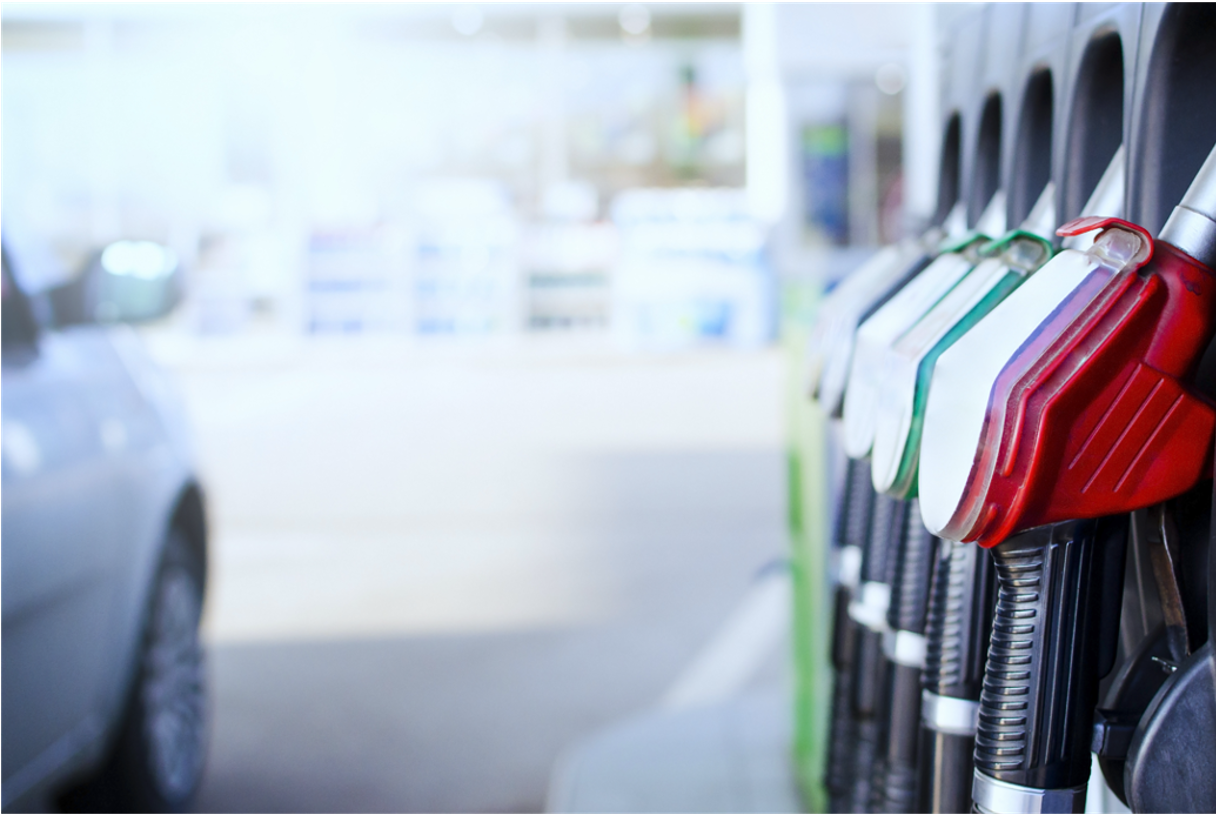
Picture: AdobeStock
The high volatility in petrol prices over 2026 has made filling up at the pump a painful experience for the wallet. Underappreciated though is the impact of breathing the volatile fumes while you fuel up (short-term exposure) or even worse living next to a petrol station (long-term exposure). Short-term exposure to petrol fumes causes skin and mucous membrane irritation, immune, metabolic and cardiovascular impacts (Zhou et al., 2025). Long-term exposure to petrol fumes, collectively termed volatile organic compounds (VOCs), containing nasties like Benzene, Toulene, Ethylbenzene and Xylene (BTEX), can cause cancer.
Limiting public and worker exposures to VOCs (especially those BTEX chemicals) through vapour recovery has been best practice internationally since 1986. An early Swedish study noted that vapour recovery systems reduce 99% of exposures, and >95% of VOC emissions to the airshed (Berglund and Petersson, 1990). When vapour recovery is in place at petrol stations, benzene exposures are minimised (Muto et al., 2025).
VOCs go on to form ozone when combined with NOx, which is primarily emitted from traffic in our cities. Both NOx and ozone create photochemical smog, especially under high temperatures, and traffic related pollution is responsible for nearly half of the 4,160 annual premature deaths (for 2023) in Australia due to air pollution. You may have also heard how Australia has allowed more pollution from petrol temporarily by easing the sulfur content regulations, allowing up to 50ppm sulfur until the end of September, and up to 40ppm sulfur until 1 January 2027 when it will return to the newly introduced 10ppm limit.
Most people are surprised to learn that when they fill their car, they can be exposed to benzene and other harmful chemicals that have been linked to serious health impacts. The technology to reduce these exposures has existed for decades.
- Professor Robyn Schofield, School of Geography, Earth and Atmospheric Sciences, Faculty of Science, University of Melbourne
Petrol vapour recovery has a couple of stages. Stage I is required everywhere in Australia – recapturing vapours when fuel is delivered to the service stations’ tanks by petrol tankers. Stage II vapour recovery occurs when petrol is delivered to individual vehicles – recapturing the vapours via the nozzle as you fuel up your car. Stage II has been compulsory in Sweden since the late 1980s, Germany since 1992, EU since 2009, and the UK since 2010; it is widespread in the US, and Asia, and has been in place in New South Wales since 2017 – the year which the EU published a report on their successful implementation and benefits.
The epidemiological evidence for avoiding petrol station VOC releases is also in. A 2023 Italian study found that if you live within 50 metres of a petrol station, you have 2.2 times higher chance of childhood leukemia. And within 250 metres the odds are 1.6 times higher, compared to living over 1000 metres from a petrol station (Malavolti et al., 2023). In Canada, Brizard et al., (2026) showed that the risk of all childhood cancers was 42% higher for children who lived at birth within 100 metres of a petrol station; with the leukemias having a 55% higher risk relative to unexposed groups. This is contrasted with Montreal, where vapour recovery controls are in place, and the risks for living within 100 metres of a petrol station for leukemias were reduced to ~15% elevated risk.
In 2013, New South Wales began with upgrading 1,300 petrol stations with stage II vapour recovery technology, removing 5,000 tonnes of VOCs from their airshed annually. The recaptured vapour can be sold as petrol, an efficiency that should be welcomed in these times of fuel insecurity. The cost of retrofitting was estimated between $20,000 for an individual service station, and up to $450,000 for larger companies with multiple tanks and stations – essentially a cost of 0.2c per litre over a 10 years compliance period.
Petrol, being volatile, may evaporate from your fuel tank or fuel lines while your car is parked too. Most vehicles prevent this by capturing the fumes with an Evaporative Emission Control (EVAP) system, an activated charcoal canister that is purged when the engine is running, burning the captured fuel. But breakthrough emissions can occur when the canister is overloaded, i.e. after parking for several days, or through aged fuel lines. Many new vehicles now also have onboard refuelling vapour recovery (ORVR), actively capturing fumes in a bigger canister while refuelling. But Australia does not mandate ORVR in the design rules for cars entering Australia now or even after 1st July 2028, when alignment with Euro 6d standards is required. Euro 6d relies on stage II vapour recovery at the pump and therefore does not mandate ORVR within vehicles, which is required by the US and Asian cars. ORVR likely will be part of Euro 7 emission standards.
Our fleet is a mix of vehicles of different ages, and on average is about 10 years old. As our fleet electrifies over time and more ORVR vehicles enter the fleet, BTEX exposures will be reduced. Electric vehicles (EVs) will avoid VOC emission/petrol issues, but mild hybrids, hybrids and plug-in hybrids (often badged as EVs) with their petrol tanks don’t. Adopting vehicle design standards that assume petrol stations recapture refuelling vapours, when they don’t, just like assuming low sulfur petrol, means Australians will suffer both inefficient fuel usage and toxic VOC exposures in the meantime.
In Victoria, there has been no retrofit plan to upgrade existing petrol stations for stage II vapour recovery to achieve consistent public health protection across local council and state lines. The Victorian General Environmental Duty ‘to eliminate or otherwise reduce risks of harm from your waste or pollution so far as reasonably practicable’ means that stage II vapour recovery is now often applied at the planning stage by councils for new petrol stations. Existing petrol stations don’t have to install or operate stage II vapour capture, but they can voluntarily do so, which at 0.2 cents per litre is a bargain for reducing childhood cancers. A less patchy outcome would be a state-wide mandate now for stage II vapour recovery for the multinational companies who operate in both Victoria and New South Wales, while working towards full compliance across all petrol stations across Australia.
Cities around the world have demonstrated that stage II vapour recovery is an effective and affordable way to reduce air pollution at petrol stations. Victoria has an opportunity to catch up with international best practice and deliver cleaner air for motorists and communities.
- Professor Robyn Schofield, School of Geography, Earth and Atmospheric Sciences, University of Melbourne
It will be somewhat surprising (and shocking) to readers that in most of Australia (excepting New South Wales), stage II vapour recovery isn’t already mandated and our communities are unprotected from BTEX exposures when fuelling up or living near petrol stations. It does seem like very low hanging fruit that will deliver less childhood cancers and healthier urban airsheds. Why wouldn’t we want this in our liveable cities?
For more information, contact Professor Robyn Schofield, Professor in Atmospheric Chemistry, School of Geography, Earth and Atmospheric Sciences, Faculty of Science, at the University of Melbourne.
References
Berglund, P.M. and Petersson, G. (1990) “Hazardous petrol hydrocarbons from refuelling with and without vapour recovery,” Science of The Total Environment, 91, pp. 49–57. Available at: https://doi.org/10.1016/0048-9697(90)90287-5.
Brizard, F. et al. (2026) “Gasoline stations and risk of childhood cancer: a population-based cohort study in Quebec, Canada,” Environmental Pollution, 394, p. 127737. Available at: https://doi.org/10.1016/j.envpol.2026.127737.
Malavolti, M. et al. (2023) “Residential proximity to petrol stations and risk of childhood leukemia,” European Journal of Epidemiology, 38(7), pp. 771–782. Available at: https://doi.org/10.1007/s10654-023-01009-0.
Muto, E.Y. et al. (2025) “Benzene Exposure in Gas Stations across the World: A Systematic Review,” ACS Chemical Health & Safety, 32(5), pp. 534–547. Available at: https://doi.org/10.1021/acs.chas.5c00041.
Zhou, L. et al. (2025) “Associations of ambient exposure to benzene, toluene, ethylbenzene, and xylene with daily mortality: a multicountry time-series study in 757 global locations,” The Lancet Planetary Health, 9(9). Available at: https://doi.org/10.1016/j.lanplh.2025.101306.