Spotlight on a researcher: Isrrah Malabanan
How equitable electric vehicle charging access can support more sustainable, inclusive transport systems.
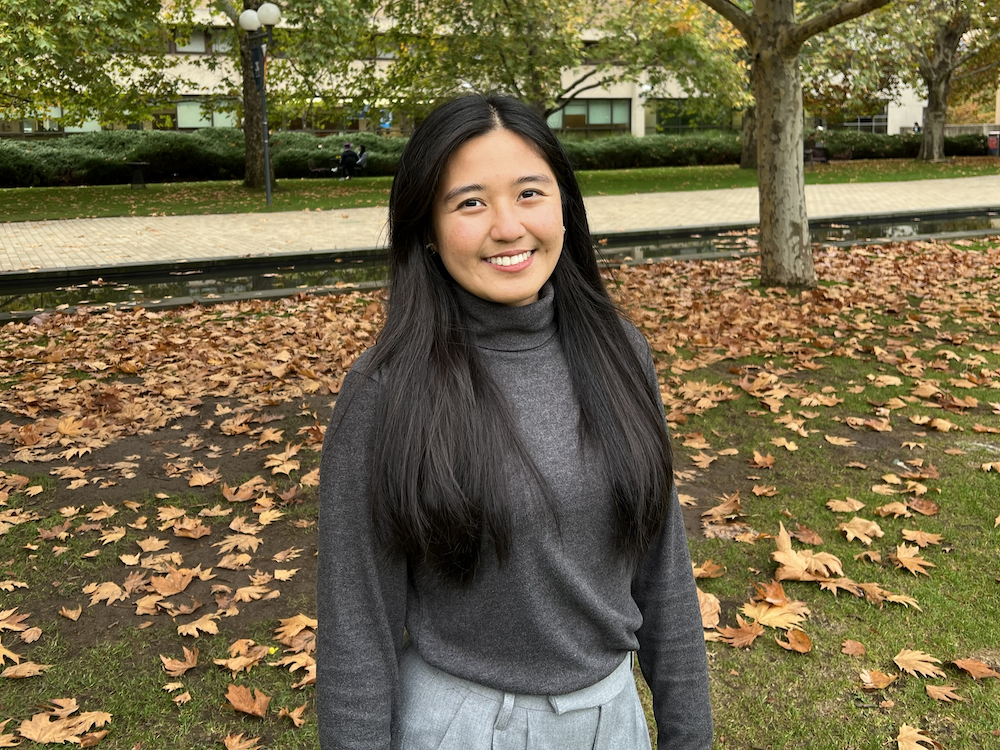
As Australia’s transport system shifts toward electric vehicles, access to charging infrastructure will play an important role in who can participate in the transition. Isrrah Malabanan’s research at the University of Melbourne explores equitable electric vehicle charging access, transport planning and sustainable mobility, looking at how infrastructure provision can shape people’s travel behaviour and participation in everyday life.
In simple terms, can you tell us what your research is about?
As more people switch to electric vehicles (EVs) because of rising fuel prices and concerns about climate change, access to EV charging infrastructure becomes crucial. My research looks at how to plan and provide EV charging access more equitably, including which factors matter, who should be prioritised for access, and why those considerations are important.
OK, now give us the technical terms!
My research supports user-centred planning of EV charging infrastructure by exploring the key determinants and travel-related impacts of EV charging accessibility, using the capabilities approach.
I conceptualise charging access as a user’s capability: the real opportunity to charge an EV that results from the interaction between available charging resources and users’ diverse abilities and circumstances. In turn, charging access enables other capabilities, such as the opportunity to travel and participate in desired activities, linking infrastructure provision to people’s mobility and everyday lives.
My research proceeds in two complementary phases. The first, qualitative phase identifies the factors that make charging easy or difficult, and explores how limited access to charging infrastructure shapes travel patterns and activity participation. The second, quantitative phase empirically validates the qualitative findings by estimating the strength of relationships between determinants, charging access, and travel-related outcomes.
Central to both phases is a focus on charging disadvantaged users, or those with lower capability levels. My research identifies the barriers they face and generates evidence to guide more equitable charging provision.
Why did you choose this area of research? What interests you about it?
My academic and industry training in the transport field often assumed general travel patterns and treated users as homogeneous when designing and planning transport infrastructure. I realised this can overlook the diversity of people’s experiences, so I chose to focus on user-centred transport planning.
Combined with my interest in emerging technologies and sustainable transport, I became particularly interested in how people’s travel behaviour changes with EV adoption, the role of charging access in that behaviour change, and how this evidence can guide more user-centred infrastructure planning.
What’s the bigger picture? How will your work contribute to the transition to a clean energy system?
Transport is a key part of the clean energy system, with EVs, public transport and active modes all contributing to lower emissions. My research supports the EV transition by strengthening the evidence base that planners and policymakers need to allocate resources and design targeted interventions.
It also highlights the needs of charging disadvantaged users, so investment and policy can avoid or reduce charging access inequalities and support a more equitable EV transition.
What did you study to get here?
I hold a Bachelor of Science in Civil Engineering from the Philippines, and a Master of Science in Transportation Engineering from Thailand. Between degrees and before starting my PhD, I worked as a graduate highway design engineer and as a traffic and transport engineer.
These academic and practical experiences provided the basis for my decision to pursue research into user-centred transport planning.
And what comes next?
As part of my PhD research, I’m currently examining how charging accessibility calculated using proximity-based metrics compares with how people actually perceive the ease of accessing EV chargers. I will present this work at the World Symposium on Transport and Land Use in June.
After that, I’ll run one more study and then complete my PhD. Post-PhD, I hope to continue researching travel behaviour using sustainable transport modes to support more user-centred planning and policy.
Have you received any honours, awards, or grants for your work?
Here are a few awards I have recently received:
- Melbourne Energy Institute Symposium (2025) Poster Competition (3rd place, Power Generation and Transport)
- Australasian Transport Research Forum (2024) Best Student Presentation Award (Traffic Modelling and Management)
- Infrastructure Engineering Graduate Research Conference (2024) Best Presentation Award (Transport) and Best Poster Award (Civil-Transport)
Do you have any recent publications to share?
Malabanan, I., Lavieri, P. S., Mateo-Babiano, I., Ahmed, W., & De Vos, J. (2026). Electric vehicle charging dissonance: Exploring how renters and multi-unit dwelling residents navigate limited charging access. Journal of Transport Geography, 130, 104453. https://doi.org/https://doi.org/10.1016/j.jtrangeo.2025.104453
Malabanan, I., Lavieri, P., & Mateo-Babiano, I. (2025). Electric vehicle charging disadvantage: a social justice perspective on charging with implications to accessibility. Transport Reviews, 1-30. https://doi.org/10.1080/01441647.2025.2502879
Malabanan, I., Lavieri, P.S., & Mateo-Babiano, I., (2024). Evaluation of Australian Electric Vehicle Charging Policies through a Social Justice Perspective Australasian Transport Research Forum. Melbourne, Australia. https://australasiantransportresearchforum.org.au/wp-content/uploads/2025/02/ATRF2024_Abridged_59-2.pdf
Isrrah Malabanan is a PhD researcher at the University of Melbourne. You can contact Isrrah Malabanan via email or LinkedIn for more information about her research.