View recording and slides 〉Enhancing Grid Resilience Towards Net-Zero
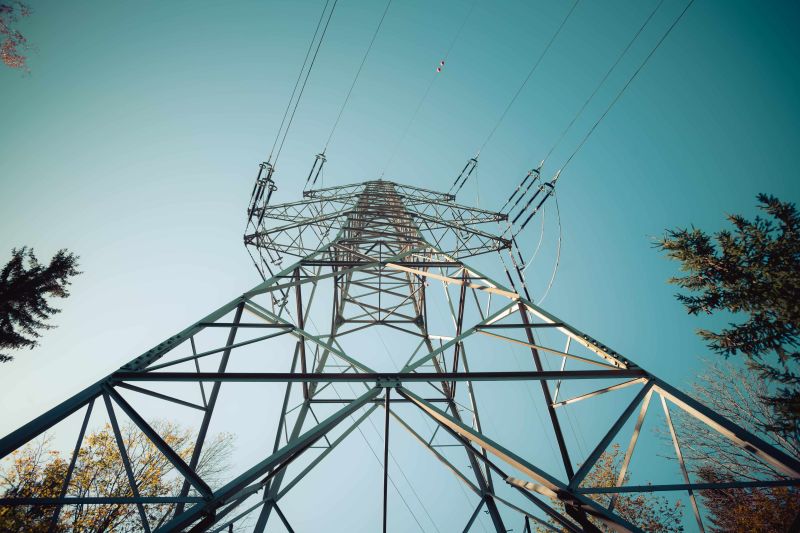
Share via
Powering the Future seminar #5
About this event
The Melbourne Energy Institute held its fifth seminar in the Powering the Future series, presented by Dean Sharafi and Dr. Mohammad Mohammadi from Australian Energy Market Operator (AEMO), and Prof. Pierluigi Mancarella, from the University of Melbourne.
Australia’s electricity systems are undergoing one of the fastest energy transitions in the world, driven by large-scale renewable integration, storage deployment, electrification, and the retirement of conventional generation. At the same time, the resilience of both the National Electricity Market (NEM) on the east coast and the South-West Interconnected System (SWIS) in Western Australia is being tested by increasingly complex operational conditions, extreme weather events, fuel supply interactions and changing demand patterns.
This session explored the evolving concept of power system resilience from both operational and planning perspectives. By comparing experiences and emerging challenges across Australia’s east and west coast grids, the session provided insights into how resilient, reliable and economically sustainable power systems can be designed to support the net-zero energy transition.
Speakers
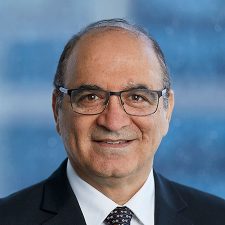
Dean Sharafi
Strategic Advisor-Energy Transition
Australian Energy Market Operator (AEMO)
Dean Sharafi is the Strategic Advisor on energy transition at the Australian Energy Market Operator (AEMO). Dean holds a degree in Applied Physics, a degree in Electrical Engineering and a degree in Business Management. He has around 30 years of experience in power system engineering which includes Power System Protection, High Voltage Systems, Asset Management and Power System and Electricity Market Operation. He is a member of Australian Institute of Management, Cigre, Engineers Australia and a senior member the IEEE. Dean has been actively involved with IEEE Power and Energy Society initiatives and Cigre Working Groups over the last two decades and served as a member of the Governing Board of the IEEE PES from 2017 to 2022 and is currently the PES Treasurer. Dean is also an Associate Editor for the IEEE Transactions on Power Systems Journal and an IEEE Distinguished Lecturer.
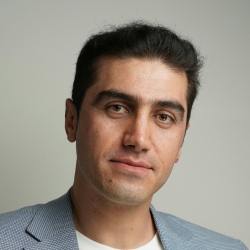
Dr. Mohammad Mohammadi
Senior Engineer - Future Energy Systems
Australian Energy Market Operator (AEMO)
Mohammad is a Senior Engineer in the Future Energy Systems group at the Australian Energy Market Operator (AEMO), specialising in sector coupling, power system analysis and planning studies. His recent work involves contributing to system security transition planning and leading several programs to assess the performance of grid-forming (GFM) battery energy storage systems (BESS), as well as quantifying system services like synthetic inertia from GFM BESS to support the transition to a low-carbon future. Mohammad holds a PhD in Electrical Engineering from the University of Melbourne. In addition to his industry work, he is actively involved in collaborations with the research community, including serving as a topic lead in AEMO’s research priorities on modelling and interconnection of large loads and CSIRO’s AR-PST. His research has been published in over 20 journal papers and book chapters, and he has received several awards, such as Young Power Engineer of the Year (2025) from the Electric Energy Society of Australia.

Prof. Pierluigi Mancarella
Energy Systems Program Leader, Melbourne Energy Institute
Chair Professor of Electrical Power Systems
University of Melbourne
Professor Pierluigi Mancarella is the Chair Professor of Electrical Power Systems at the University of Melbourne and Professor of Smart Energy Systems at the University of Manchester, UK. His key research interests include technoeconomic modelling and analysis of multi-energy systems, grid integration of renewables and distributed energy resources, energy infrastructure planning under uncertainty, and security, reliability, and resilience of low-carbon networks.
Pierluigi is the Energy Systems Program Leader at the Melbourne Energy Institute, a Fellow of the IEEE (Institute of Electrical and Electronics Engineers), an IEEE Power and Energy Society Distinguished Lecturer, the Convenor of the CIGRE (International Council of Large Electric Systems) C6/C2.34 Working Group on “Flexibility Provision from Distributed Energy Resources”, holds the 2017 veski innovation fellowship for his work on urban-scale virtual power plants, and is a recipient of the international Newton Prize 2018 for his work on power system resilience in Chile. He is author of several books and over 300 research papers and reports and is a Senior Editor of the IEEE Transactions on Power Systems, and the Oxford Open Energy journal.
Pierluigi is the Australian principal investigator of the US-UK-Australia Global Center in Climate Change and Clean Energy “EPICS” (“Electric Power Innovation for a Carbon-free Society”). In the past few years, he has supported the Finkel Review panel, the Australian Energy Market Operator, the Australian Energy Market Commission, and the Australian Energy Regulator on relevant research and consultancy projects on power system security, reliability, and resilience, and has led and been involved in several projects via the Australian Renewable Energy Agency, Cooperative Research Centres, and the Commonwealth Scientific and Industrial Research Organisation.

About MEI's Powering the Future Seminar Series
Bringing together leading researchers and industry experts, MEI’s Powering the Future seminar series will explore the key technological developments shaping the energy sector.
Designed for energy industry professionals, government stakeholders, students, and academics, the seminars aim to foster informed discussion across technical, economic and policy dimensions of the energy transition. Each session will be delivered in a hybrid format, allowing participants to attend in person or join online.
Read more about the seminars, and sign up to be notified when the seminars are open for registration.
Disclaimer: The views and opinions expressed are those of the presenter and do not necessarily reflect the official position of The Melbourne Energy Institute and The University of Melbourne.
The Melbourne Energy Institute welcomes broad discussion. Please engage respectfully and considerately with all perspectives.
Subscribe
If you aren't already, you can subscribe for Melbourne Energy Institute’s news and events here.